Selasa, 10 Mei 2016

How is Accounting Used in Business?


It's important not to confuse profit with cash flow. Profit equals sales revenue minus expenses. A business manager shouldn't assume that sales revenue equals cash inflow and that expenses equal cash outflows.

It might seem obvious, but in managing a business, it's important to understand how the business makes a profit. The business subtracts the amount of fixed expenses for the period, which gives them the operating profit before interest and income tax.

Budgeting forces a business manager to focus on the factors that need to be improved to increase profit. If nothing else, at least plug the numbers in your profit report for sales volume, sales prices, product costs and other expense and see how your projected profit looks for the coming year.

It might seem obvious, but in managing a business, it's important to understand how the business makes a profit. The business subtracts the amount of fixed expenses for the period, which gives them the operating profit before interest and income tax.

Budgeting provides important advantages, like understanding the profit dynamics and the financial structure of the business. Budgeting forces a business manager to focus on the factors that need to be improved to increase profit. If nothing else, at least plug the numbers in your profit report for sales volume, sales prices, product costs and other expense and see how your projected profit looks for the coming year.

What does an Audit Report Contain?


One modification to an auditor's report is very serious - when the CPA firm says that it has substantial doubts about the capability of the business to continue as a going concern. Unless there is evidence to the contrary, the CPA auditor assumes that the business is a going concern. If an auditor has serious concerns about whether the business is a going concern, these doubts are spelled out in the auditor's report.

Most audit reports on financial statements give the business a clean bill of health, or a clean opinion. The threat of an adverse opinion almost always motivates a business to give way to the auditor and change its accounting or disclosure in order to avoid getting the kiss of death of an adverse opinion. The SEC does not tolerate adverse opinions by auditors of public businesses; it would suspend trading in a company's stock share if the company received an adverse opinion from its CPA auditor.

What does an Audit do?


After completing an audit examination, the CPA prepares a short report stating that the business has prepared its financial statements, according to generally accepted accounting principles (GAAP), or where it has not. Federal law doesn't require audits for private businesses, banks and other lenders to private businesses may insist on audited financial statements. Instead of an audit, which they can't really afford, many smaller businesses have an outside CPA come in on a regular basis to look over their accounting methods and give advice on their financial reporting.

Federal law doesn't require audits for private businesses, banks and other lenders to private businesses may insist on audited financial statements. Instead of an audit, which they can't really afford, many smaller businesses have an outside CPA come in on a regular basis to look over their accounting methods and give advice on their financial reporting.

That's where audits come in. Audits are one means of keeping misleading financial reporting to a minimum. An audit exam can uncover problems that the business was not aware of.

After completing an audit examination, the CPA prepares a short report stating that the business has prepared its financial statements, according to generally accepted accounting principles (GAAP), or where it has not. All businesses that are publicly traded are required to have annual audits by independent CPAs.

What is Accounting Fraud?


Accounting fraud is an improper and deliberate manipulation of the recording of sales revenue and/or expenses in order to make a company's profit performance appear better than it actually is. Some things that companies do that can constitute fraud are:

The other way a business commits accounting fraud is by under-recording expenses, such as not recording depreciation expense. Or a business may choose not to record all of its cost of goods sold expense fore the sales made during a period. This would make the gross margin higher, but the business's inventory asset would include products that actually are not in inventory because they've been delivered to customers.

It delivers products to dealers or final customers that they really don't want, but business makes deals on the side that provide incentives and special privileges if the customers or dealers don't object to taking premature delivery of the products. The other way a business commits accounting fraud is by under-recording expenses, such as not recording depreciation expense. Or a business may choose not to record all of its cost of goods sold expense fore the sales made during a period.

-- Not listing prepaid expenses or other incidental assets
-- Not showing certain classifications of current assets and/or liabilities
-- Collapsing short- and long-term debt into one amount.

Until the returns are made, the business records the shipments as if they were actual sales. It delivers products to dealers or final customers that they really don't want, but business makes deals on the side that provide incentives and special privileges if the customers or dealers don't object to taking premature delivery of the products. A business may also delay recording products that have been returned by customers to avoid recognizing these offsets against sales revenue in the current year.

A business might also choose not to record asset losses that should be recognized, such as uncollectible accounts receivable, or it might not write down inventory under the lower of cost or market rule. A business might also not record the full amount of the liability for an expense, making that liability understated in the company's balance sheet. Its profit, therefore, would be overstated.

What are independent auditors?


A good auditor need technical know-how, but also needs to know how to be tough on the accounting methods of the client. His job is to be the agent of the shareholders and other users of the business's financial report. It's incumbent on an auditor to strictly uphold GAAP, and not let any irregularities slide.

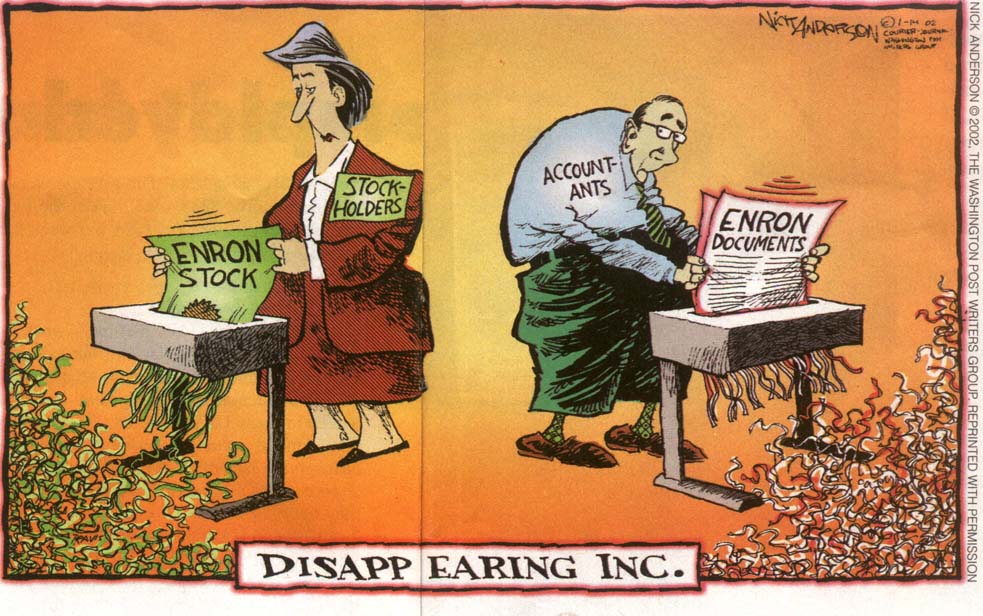
There are a number of well-known companies that engaged in accounting fraud recently and that fraud was not discovered by the CPA auditors. Enron is one of these companies. In this case, the auditing firm, Arthur Anderson was found guilty of obstruction of justice because it destroyed audit evidence.

An auditor judges whether the business's accounting methods are in accordance with generally accepted accounting principles (GAAP). At times an auditor will wave a red or yellow flag.

Indpendent CPA auditors are like referees in the financial reporting arena. The CPA comes in, does an audit of the business's accounting system and methods and gives a report that is attached to the company's financial statements. Publicly owned businesses are required to have their annual financial reports audited by independent CPA firms and any privately owned businesses have audits done as well because they know that an audit report will add credibility to their financial reports.

Indpendent CPA auditors are like referees in the financial reporting arena. An auditor judges whether the business's accounting methods are in accordance with generally accepted accounting principles (GAAP). A good auditor need technical know-how, but also needs to know how to be tough on the accounting methods of the client.

An auditor must exercise professional skepticism, meaning the auditor should challenge the accounting methods and reporting practices of the client in order to make sure that its financial statement conform with accounting standards and are not misleading - in short, that the financial statement are fairly presented. The words "fairly presented" are the exact words used in the auditor's report.

What is Acid Test Ratio and ROA Ratio?

ROA is a useful ratio for interpreting profit performance, aside from determining financial gain or loss. ROA is called a capital utilization test that measures how profit before interest and income tax was earned on the total capital employed by the business.


A business may realize a financial leverage gain, meaning it earns more profit on the money it has borrowed than the interest paid for the use of the borrowed money. The ROA ratio is determined by dividing the earnings before interest and income tax (EBIT) by the net operating assets.

An investor compares the ROA with the interest rate at which the corporation borrowed money. If a business's ROA is 14 percent and the interest rate on its debt is 8 percent, the business's net gain on its capital is 6 percent more than what it's paying in interest.

Investors calculate the acid test ratio, also known as the quick ratio or the pounce ratio. This ratio excludes inventory and prepaid expenses, which the current ratio includes, and it limits assets to cash and items that the business can quickly convert to cash. This ratio is also known as the pounce ratio to emphasize that you're calculating for a worst-case scenario, where the business's creditors could pounce on the business and demand quick payment of the business's liabilities.

This ratio is also known as the pounce ratio to emphasize that you're calculating for a worst-case scenario, where the business's creditors could pounce on the business and demand quick payment of the business's liabilities. Short term creditors do not have the right to demand immediate payment, except in unusual circumstances. This ratio is a conservative way to look at a business's capability to pay its short-term liabilities.

Investors calculate the acid test ratio, also known as the quick ratio or the pounce ratio. This ratio excludes inventory and prepaid expenses, which the current ratio includes, and it limits assets to cash and items that the business can quickly convert to cash.

What are Other Ratios Used in Financial Reporting

The dividend yield ratio tells investors how much cash income they're receiving on their stock investment in a business. This is calculated by dividing the annual cash dividend per share by the current market price of the stock. This can be compared with the interest rate on high-grade debt securities that pay interest, such as Treasure bonds and Treasury notes, which are the safest.

The current ratio is a measure of a business's short-term solvency, in other words, its ability to pay it liabilities that come due in the near future. Businesses are expected to maintain a minimum 2:1 current ratio, which means its current assets should be twice its current liabilities.


The return on equity (ROE) ratio tells how much profit a bus8iness earned in comparison to the book value of its stockholders' equity. ROE is also calculated for public corporations, but it plays a secondary role to other ratios.

Book value per share is calculated by dividing total owners' equity by the total number of stock shares that are outstanding. While EPS is more important to determine the market value of a stock, book value per share is the measure of the recorded value of the company's assets less its liabilities, the net assets backing up the business's stock shares. It's possible that the market value of a stock could be less than the book value per share.

What's The Difference Between Public and Private Company Reporting

Many publicly owned businesses make their required filings with the SEC, but they present very different annual financial reports to their stockholders. A large number of public companies include only condensed financial information rather than comprehensive financial statements. They will generally refer the reader to a more detailed SEC financial report for more specifics.

A public corporation is a business whose securities are traded on the public stock exchanges, such as the New York Stock Exchange and Nasdaq. When the shareholders of a private business receive the periodical financial reports, they are entitled to assume that the company's financial statements and footnotes are prepared in accordance with GAAP. A large number of public companies include only condensed financial information rather than comprehensive financial statements.

In contrast, the annual report of a publicly traded company has more whistles and bells to it. There are also more requirements for reporting. These include the management discussion and analysis (MD&A) section that presents the top managers' interpretation and analysis of the business's profit performance and other important financial developments over the year.

A public corporation is a business whose securities are traded on the public stock exchanges, such as the New York Stock Exchange and Nasdaq. When the shareholders of a private business receive the periodical financial reports, they are entitled to assume that the company's financial statements and footnotes are prepared in accordance with GAAP. The content of a private business's annual financial report is often minimal.

Another section required for public companies is the earnings per share (EPS). This is the only ratio that a public business is required to report, although most public companies report a few others. A three-year comparative income statement is also required.

What is Price/Earnings Ratio


P/E ratios are currently running high, despite a four-year slump in the stock market. P/E ratios vary from industry to industry and from year to year. One dollar of EPS may command only a $10 market value for a mature business in a no-growth industry, while a dollar of EPS in a dynamic business in a growth industry may have a $30 market value per dollar of earnings, or net income.

The P/E ratio is a reality check on just how high the current market price is in relation to the underlying profit that the business is earning. When investors think that the company's earnings per share (EPS) has a lot of upside potential in the future, extraordinarily high P/E ratios are justified only.

To sum up, the price/earnings ratio, or P/E ratio is the current market price of a capital stock divided by its trailing 12 months' diluted earnings per share (EPS) or its basic earnings per share if the business does not report diluted EPS. A low P/E may signal an underbalued stock or a pessimistic forecast by investors. A high P/E may reveal an overvalued stock or might be based on an optimistic forecast by investors.

The P/E ratio is calculated dividing the current market price of the stock by the most recent trailing 12 months diluted EPS. Stock share prices bounce around day to day and are subject to big changes on short notice. The current P/E ratio should be compared with the average stock market P/E to gauge whether the business selling above or below the market average.

The price/earning (P/E) ratio is another measurement that's of particular interest to investors in public businesses. The P/E ratio gives you an idea of how much you're paying in the current price for stock shares for each dollar of earning. Earnings prop up the market value of stock shares, not the book value of the stock shares that's reported in the balance sheet.

What is Earnings Per Share


It's important to the stockholders who want the net income of the business to be communicated to them on a per share basis so they can compare it with the market price of their shares.

A business might issue additional stock shares during the year and buy back some of its own shares.

The EPS gives investors a means of determining the amount the business earned on its stock share investments. In other words, EPS tells investors how much net income the business earned for each stock share they own. It's important to the stockholders who want the net income of the business to be communicated to them on a per share basis so they can compare it with the market price of their shares.

A business might issue additional stock shares during the year and buy back some of its own shares. Or it might issue several classes of stock, which will cause net income to be divided into two or more pools - one pool for each class of stock.

Because stockholders focus more on the business's total net income, private businesses don't have to report EPS.

Basic EPS is based on the number of stock shares that are outstanding. Diluted earnings are based on shares that are outstanding and shares that may be issued in the future in the form of stock options.

Diluted earnings are based on shares that are outstanding and shares that may be issued in the future in the form of stock options.

How to Analyze a Financial Statement

One way to interpret a financial report is to compute ratios, which means, divide a particular number in the financial report by another. Financial statement ratios are also useful because they enable the reader to compare a business's current performance with its past performance or with another business's performance, regardless of whether sales revenue or net income was bigger or smaller for the other years or the other business.

Publicly owned businesses are required to report just one ratio (earnings per share, or EPS) and privately-owned businesses generally don't report any ratios. One ratio that's a useful indicator of a company's profitability is the gross margin ratio. A profit ratio of 5 to 10 percent is common in most industries, although some highly price-competitive industries, such as retailers or grocery stores will show profit ratios of only 1 to 2 percent.

There aren't many ratios in financial reports. Publicly owned businesses are required to report just one ratio (earnings per share, or EPS) and privately-owned businesses generally don't report any ratios. Generally accepted accounting principles (GAAP) don't require that any ratios be reported, except EPS for publicly owned companies.


One ratio that's a useful indicator of a company's profitability is the gross margin ratio. Businesses don't discose margin information in their external financial reports.

The profit ratio is very important in analyzing the bottom-line of a company. It indicates how much net income was earned on each $100 of sales revenue. A profit ratio of 5 to 10 percent is common in most industries, although some highly price-competitive industries, such as retailers or grocery stores will show profit ratios of only 1 to 2 percent.

Ratios don't provide definitive answers. They're useful indicators, but aren't the only factor in gauging the profitability and effectiveness of a company.

Parts of an Income Statement (Part III)

When accounting for income tax expense, however, a business can use different accounting methods for some of its expenses than it uses for calculating its taxable income. The income tax based on this hypothetical taxable income is fitured. A reconciliation of the two different income tax amounts is then provided in a footnote on the income statement.

Net income is like earnings before interest and tax (EBIT) and can vary considerably depending on which accounting methods are used to report sales revenue and expenses. This is where profit smoothing can come into play to manipulate earnings. Profit smoothing crosses the line from choosing acceptable accounting methods from the list of GAAP and implementing these methods in a reasonable manner, into the gray area of earnings management that involves accounting manipulation.


When accounting for income tax expense, however, a business can use different accounting methods for some of its expenses than it uses for calculating its taxable income. The income tax based on this hypothetical taxable income is fitured. A reconciliation of the two different income tax amounts is then provided in a footnote on the income statement.

It's incumbent on managers and business owners to be involved in the decisions about which accounting methods are used to measure profit and how those methods are actually implemented. Accounting methods and how they're implemented vary from business to business.

Parts of an Income Statement (Part II)


Of course profit and cost of goods sold expense are the two most critical components of an income statement, or at least they're what people will look at. An income statement is truly the sum of its parts, and they all need to be considered carefully, consistently and accurately.

In reporting depreciation expense, a business can use a short-life method and load most of the expense over the first few years, or a longer-life method and spread the expense evenly over the years. Depreciation is a big expense for some businesses and the method of reporting is especially critical for them.

Earnings before interest and tax (EBIT) measures the sales revenue less all the expenses above this line. It depends on all the decisions made for recording sales revenue and expenses and how the accounting methods are implemented.

Many products are sold with expressed or implied guarantees and warranties. The business should estimate the cost of these future obligations and record this amount as an expense in the same period that the goods are sold, along with the cost of goods expense. It can't really wait until customers actually return products for repair or replacement, should be forecast as a percent of the total products sold.

Other operating expenses that are reported in an income statement may also have timing or estimating considerations. Some expenses are also discretionary in nature, which means that how much is spent during the year depends on the discretion of management.

One of the more complex elements of a an income statement is the line reporting employee pensions and post-retirement benefits. The GAAP rule on this expense is several and complex key estimates must be made by the business, such as the expected rate of return on the portfolio of funds set aside for these future obligations. This and other estimates affect the amount of expense recorded.

Parts of an Income Statement (Part I)


Cost of goods sold expense is a huge item in an income statement and how it's reported can make a substantial impact on the reported bottom line.

The first and most important part of an income statement is the line reporting sales revenue. When does an ad agency report the sales revenue for a campaign it's prepared for its client? These are issues a company must decide on for reporting sales revenue, and they must be consistent each year, and the timing of reporting should be noted on the financial statement.

Other items in an income statement include inventory write-downs. Bad debts are also an important component of the income statement. Again the timing of when bad debts are reported is crucial.

The first and most important part of an income statement is the line reporting sales revenue. These are issues a company must decide on for reporting sales revenue, and they must be consistent each year, and the timing of reporting should be noted on the financial statement.

The next line in an income statement is the cost of goods sold expense. Cost of goods sold expense is a huge item in an income statement and how it's reported can make a substantial impact on the reported bottom line.

Measuring Costs


Cost accounting serves two broad purposes: measuring profit and furnishing relevant information to managers. The phrase actual cost depends entirely on the particular methods used to measure cost. The total cost of products or goods sold is the first and usually largest expense deducted from sales revenue in measuring profit.

Many manufacturing costs can not be directly matched with particular products; these are called indirect costs. To calculate the full cost of each product manufactured, accountants devise methods for allocating indirect production costs to specific products. The phrase actual cost depends entirely on the particular methods used to measure cost.

Accountants need to determine many other costs, in addition to product costs, such as the costs of the departments and other organizational units of the business; the cost of the retirement plan for the company's employees; the cost of marketing and advertising; the cost of restructuring the business or the cost of a major recall of products sold by the company, should that ever become necessary.

Many manufacturing costs can not be directly matched with particular products; these are called indirect costs. To calculate the full cost of each product manufactured, accountants devise methods for allocating indirect production costs to specific products.

Measuring profits or net income is the most important thing accountants do. The second most important task is measuring costs. Costs are extremely important to running a business and managing them effectively can make a substantial difference in a company's bottom line.

Types of Costs

Direct costs are those costs that cann be directly attributed to a product or product line, or to one source of sales revenue, or one business unit or operation of the business. An example of a direct cost would be the cost of tires on a new automobile.

The cost of labor or benefits for an auto manufacturer is certainly a cost, but it can't be attached to any one vehicle. Business managers and accounts should always keep an eye on the allocation methods used for indirect costs and take the cost figures produced by these methods with a grain of salt.

Fixed costs are those costs that stay the same over a relatively broad range of sales volume or production output. They're like an albatross around the neck of business and a company must sell its product at a high enough profit to at least break even.


Irrelevant costs are those that should be disregarded when deciding on a future course of action. Whereas relevant costs are future costs, irrelevant costs are those costs that were incurred in the past.

Variable costs can decrease and increase in proportion to changes in sales or production level. Variable costs vary proportionately with changes in production/.

Whereas relevant costs are future costs, irrelevant costs are those costs that were incurred in the past.

Relevant costs are essentially future costs that could be incurred, depending on what strategic course a business takes. If an auto manufacturer decides to increase production, but the cost of tires goes up, than that cost needs to be taken into consideration.

The cost of labor or benefits for an auto manufacturer is certainly a cost, but it can't be attached to any one vehicle. Business managers and accounts should always keep an eye on the allocation methods used for indirect costs and take the cost figures produced by these methods with a grain of salt.

About GAAP

For other expenses and for sales revenue, one general accounting method has been established; there are no alternative methods. One business applies the accounting methods in a conservative manner, and another business applies the methods in a more liberal manner.

For other expenses and for sales revenue, one general accounting method has been established; there are no alternative methods. One business applies the accounting methods in a conservative manner, and another business applies the methods in a more liberal manner.

For one thing, GAAP themselves permit alternative accounting methods to be used for certain expenses and for revenue in certain specialized types of businesses. For another, GAAP methods require that decisions be made about the timing for recording revenue and expenses, or they require that key factors be quantified.


It must choose which cost of good sold expense method to use and which depreciation expense method to use.

The pronouncement on GAAP prepared by the Financial Accounting Standards Board (FASB) is now more than 1000 pages long. And that doesn't even include the regulations and rules issued by the federal regulatory agency that jurisdiction over the financial reporting and accounting methods of publicly owned businesses - the Securities and Exchange Commission (SEC).

The mission of GAAP over the years has been to standardize accounting methods in order to bring about uniformity across all businesses. It must choose which cost of good sold expense method to use and which depreciation expense method to use.

Budgeting

A business budget is, at its core, a financial blueprint of the business. Budgeting relies on financial models that are the foundation for preparing budgeted financial statements.

Budgeting requires good working models of profit performance, financial condition, and cash flow from profit. Constructing good budgets is a strong incentive for businesses to develop financial models that not only help in the budgeting process but also help managers in making strategic decisions.

Ugh, budgeting is one of those topics we 'd rather avoid, but in business, it's an absolute necessity. To prepare a reasoned and thoughtful budget, an accountant must start with a broad-based critical analysis of the most recent actual performance and position of the business by the managers who are responsible for the results. Budgets should be worth this time and effort.

-- Budgeted balance sheet: The connections and ratios between sales revenue and expenses and their corresponding assets and liabilities are the elements of the basic model for the budgeted balance sheet.

-- Budgeted statement of cash flows: The changes in assets and liabilities from their balances at the end of the year just concluded to the projected balances at the end of the coming year determine cash flow from profit for the coming year.

To prepare a reasoned and thoughtful budget, an accountant must start with a broad-based critical analysis of the most recent actual performance and position of the business by the managers who are responsible for the results. A business budget is, at its core, a financial blueprint of the business. Budgeting relies on financial models that are the foundation for preparing budgeted financial statements.

-- Budgeted income statement (or profit report): This statement highlights the critical information that managers need for exercising and making decisions control. Much of the information in an internal profit report is confidential and should not be divulged outside the business.

What is a Sole Proprietorship?

As the sold proprietor of a business, you have unlimited liability, meaning that if your business can't pay all it liabilities, the creditors to whom your business owes money can come after your personal assets. Many part-time entrepreneurs may not know this, but it's an enormous financial risk. They are personally liable for the business's liabilities if they are sued or can't pay their bills.


A sole proprietorship has no other owners to prepare financial statements for, but the proprietor should still prepare these statements to know how his business is doing. Sole proprietors don't have separate invested capital from retained earnings like corporations do, they still need to keep these two separate accounts for owners' equity - not only to track the business, but for the benefit of any future buyers of the business.

A sole proprietorship is an individual or the business who has decided not to carry his business as a separate legal entity, such as a corporation, partnership or limited liability company. If they carry on business activity to make profit or income, the IRS requires that you file a separate Schedule C "Profit or Loss From a Business" with your annual individual income tax return.

What are Partnerships and Limited Liability Companies?


Some business owners choose to create partnerships or limited liability companies instead of a corporation. A partnership can also be called a firm, and refers to an association of a group of individuals working together in a business or professional practice.

They are not responsible as individuals, for the liabilities of the partnership. A partnership must have one or more general partners.

While corporations have rigid rules about how they are structured, partnerships and limited liability companies allow the division of management authority, profit sharing and ownership rights among the owners to be very flexible.

A partnership or LLC agreement specifies how profits will be divided among the owners. While stockholders of a corporation receive a share of profit that's directly related to how many shares they own, a partnership or LLC does not have to divide profit according to how much each partner invested. Invested capital is only of the factors that are used in allocating and distributing profits.

They are not responsible as individuals, for the liabilities of the partnership. An LLC is like a corporation regarding limited liability and it's like a partnership regarding the flexibility of dividing profit among the owners. A partnership or LLC agreement specifies how profits will be divided among the owners. While stockholders of a corporation receive a share of profit that's directly related to how many shares they own, a partnership or LLC does not have to divide profit according to how much each partner invested.

Partnerships fall into two categories. General partners are subject to unlimited liability.

A limited liability company (LLC) is becoming more prevalent among smaller businesses. An LLC is like a corporation regarding limited liability and it's like a partnership regarding the flexibility of dividing profit among the owners. The owners must enter into very detailed agreements about how the profits and management responsibilities are divided.

What is a corporation?


Stock shares come in different classes of stock. If a corporation ends up in financial trouble, it's required to pay off its liabilities. If any money is left over, then that money goes first to the preferred stockholders.

A corporation's "birth certificate" is the legal form that is filed with the Secretary of State of the state in which the corporation is created, or incorporated. The bank can't come after the stockholders if a corporation goes bankrupt.

A corporation issues ownership share to persons who invest money in the business. Owners of a corporation are called stockholders because they own shares of stock issued by the corporation.

The most common type of business when there are multiple owners is a corporation. The law sees a corporation as real, live person. A corporation's "birth certificate" is the legal form that is filed with the Secretary of State of the state in which the corporation is created, or incorporated.

A corporation is separate from its owners. It's responsible for its own debts. If a corporation goes bankrupt, the bank can't come after the stockholders.

A corporation issues ownership share to persons who invest money in the business. Owners of a corporation are called stockholders because they own shares of stock issued by the corporation. One share of stock is one unit of ownership; how much one share is worth depends on the total number of shares that the business issues.

What is financial window dressing?


Financial managers can do certain things to increase or decrease net income that's recorded in the year. This is called profit smoothing, income smoothing or just plain old window dressing. This isn't the same as fraud, or cooking the books.

A fixed asset that is not being actively used may have very little current or future value to a business. Instead of writing off the un-depreciated cost of the impaired asset as a loss in the current year, the business might delay the write-off until the next year.

A company can cut back on its current year's outlays for market research and product development.

A business that spends a significant amount of money for employee training and development may delay these programs until the next year so the expense in the current year is lower.

You can see how manipulating the timing of certain expenses can make an impact on net income. The effects next year cancel and offset out the effects in the current year. Less expense this year is balanced by more expense the next year.

Most profit smoothing involves pushing some amount of revenue and/or expenses into other years than they would normally be recorded. The effects next year cancel and offset out the effects in the current year. Less expense this year is balanced by more expense the next year.

When slow-paying customers are written off to expense as uncollectible accounts or bad debts receivable, a business can ease up on its rules regarding. The business can put off recording some of its bad debts expense until the next reporting year.

Most profit smoothing involves pushing some amount of revenue and/or expenses into other years than they would normally be recorded. A common technique for profit smoothing is to delay normal maintenance and repairs.

Disclosure


The chief executive of a business (usually the CEO in a publicly held corporation) has the primary responsibility to make sure that the financial statements have been prepared according to generally accepted accounting principles (GAAP) and the financial report provides adequate disclosures. He or she works with the chief financial officer or controller of the business to make sure that the financial report meets the standard of adequate disclosures.

Financial statements are the backbone of a complete financial report. A financial report is not complete if the three primary financial statements are not included. Any ethical and comprehensive financial report must include not only the primary financial statements, but disclosures.

Some common methods of disclosures include:

-- Supplementary financial schedules and tables that provide more details than can be included in the body of the financial statements.

-- Footnotes that provide information about the basic figures. Nearly all financial statements require footnotes to provide additional information for several of the account balances in the financial statements.

If the business is a public corporation subject to federal regulations regarding financial reporting to its stockholders,-- Other information may be required. Other information is voluntary and not strictly required legally or according to GAAP.

Some disclosures are required by various governing agencies and boards. These include:

-- The financial Accounting Standards Board (FASB) has designated many standards. Its dictate regarding disclosure of the effects of stock options is one such standard.
-- The Securities and Exchange Commission (SEC) mandates disclosure of a broad range of information for publicly held companies.
-- International businesses have to abide by disclosure standards adopted by the International Accounting Standards Board.

Financial statements are the backbone of a complete financial report. A financial report is not complete if the three primary financial statements are not included. A financial report requires disclosures. Any ethical and comprehensive financial report must include not only the primary financial statements, but disclosures.

What Happened in Corporate Accounting Scandals?


When a corporation deliberately skews or conceals information to appear successful and healthy to its shareholders, it has committed corporate or shareholder fraud. Corporate fraud may involve a few individuals or many, depending on the extent to which employees are informed of their company's financial practices.

Some recent corporate accounting scandals have consumed the news media and ruined hundreds of thousands of lives of the employees who had their retirement invested in the companies that defrauded them and other investors. The nuts and bolts of some of these accounting scandals are as follows:

WorldCom admitted to adjusting accounting records to cover its operation costs and present a successful front to shareholders. Nine billion dollars in discrepancies were discovered before the telecom corporation went bankrupt in July of 2002. One of the hidden expenses was $408 million given to Bernard Ebbers (WorldCom's CEO) in undisclosed personal loans.

At Tyco, shareholders were not informed of the $170 million in loans that were taken by Tyco's CEO, CFO, and chief legal officer. The loans, many of which were taken interest free and later written off as benefits, were not approved by Tyco's compensation committee. Kozlowski (former CEO), Swartz (former CFO), and Belnick (former chief legal officer) face continuing investigations by the SEC and the Tyco Corporation, which is now operating under Edward Breen and a new board of directors.

It presented erroneous accounting records to investors, and Arthur Anderson, its accounting firm, began shredding incriminating documentation weeks before the SEC could begin investigations. Money laundering, wire fraud, mail fraud, and securities fraud are just some of the indictments directors of Enron have faced and will continue to face as the investigation continues.

WorldCom admitted to adjusting accounting records to cover its operation costs and present a successful front to shareholders. It presented erroneous accounting records to investors, and Arthur Anderson, its accounting firm, began shredding incriminating documentation weeks before the SEC could begin investigations. Money laundering, wire fraud, mail fraud, and securities fraud are just some of the indictments directors of Enron have faced and will continue to face as the investigation continues.

What happened at Enron?


Everyone knows at least a little about the Enron story and the devastation it created in the lives of is employees. When accounting ethics and standards are discarded for personal greed, it's a story that belongs in any discussion of ethical accounting processes and what happens.

With this change, Enron began to function more as a middleman than a traditional energy supplier, trading in energy contracts instead of buying and selling natural gas. Enron's rapid growth created excitement among investors and drove the stock price up.

One partnership created by Enron, Chewco Investments (named after the Star Wars character Chewbacca) allowed Enron to keep $600 million in debt off of the books it showed to the government and to people who own Enron stock. When this debt did not show up in Enron's reports, it made Enron seem much more successful than it actually was.

In August 2001, Enron vice president Sherron Watkins sent an anonymous letter to the CEO of Enron, Kenneth Lay, describing accounting methods that she felt could lead Enron to "implode in a wave of accounting scandals." In August, CEO Kenneth Lay sent e-mails to his employees saying that he expected Enron stock prices to go up. He sold off his own stock in Enron.

On October 22nd, the Securities and Exchange Commission (SEC) announced that Enron was under investigation. On November 8th, Enron said that it has overstated earnings for the past four years by $586 million and that it owed over $6 billion in debt by next year.

With these announcements, Enron's stock price took a dive. This drop triggered certain agreements with investors that made it necessary for Enron to repay their money immediately. When Enron could not come up with the cash to repay its creditors, it declared for Chapter 11 bankruptcy.

With this change, Enron began to function more as a middleman than a traditional energy supplier, trading in energy contracts instead of buying and selling natural gas. Because this debt would make their earnings look less impressive, Enron began to create partnerships that would allow it to keep debt off of its books. One partnership created by Enron, Chewco Investments (named after the Star Wars character Chewbacca) allowed Enron to keep $600 million in debt off of the books it showed to the government and to people who own Enron stock. When this debt did not show up in Enron's reports, it made Enron seem much more successful than it actually was.

What is the Sarbanes-Oxley Act?

What is the Sarbanes-Oxley Act?


The Sarbanes-Oxley Act of 2002 is a United States federal law passed in response to the recent major corporate and accounting scandals including those at Enron, Tyco International, and WorldCom (now MCI). The first and most important part of the Act establishes a new quasi-public agency, the Public Company Accounting Oversight Board, which is charged with disciplining and overseeing accounting firms in their roles as auditors of public companies. Some of the major provisions of the Sarbanes-Oxley Act's include:
-- Significantly longer maximum jail sentences and larger fines for corporate executives who knowingly and willfully misstate financial statements, although maximum sentences are largely irrelevant because judges generally follow the Federal Sentencing Guidelines in setting actual sentences
-- Auditor independence, including outright bans on certain types of work for audit clients and pre-certification by the company's Audit Committee of all other non-audit work
-- Certification of financial reports by chief executive officers and chief financial officers
-- A requirement that companies listed on stock exchanges have fully independent audit committees that oversee the relationship between the company and its auditor
-- Employee protections allowing those corporate fraud whistleblowers who file complaints with OSHA within 90 days, to win reinstatement, back pay and benefits, compensatory damages, abatement orders, and reasonable attorney fees and costs.

Who Uses Forensic Accounting?

Who uses forensic accountants?


Forensic accounting financial investigative specialists work with financial information for the purpose of conveying complicated issues in a manner that others can easily understand. While some forensic accountants and forensic accounting specialists are engaged in the public practice of forensic examination, others work in private industry for such entities as banks and insurance companies or governmental entities such as sheriff and police departments, the Federal Bureau of Investigation (FBI), and the Internal Revenue Service (IRS).
The forensic accountant couples observation of the suspected employees with physical examination of assets, invigilation, inspection of documents, and interviews of those involved. Experience on these types of engagements enables the forensic accountant to offer suggestions as to internal controls that owners could implement to reduce the likelihood of fraud.
At times, the forensic accountant may be hired by attorneys to investigate the financial trail of persons suspected of engaging in criminal activity. Information provided by the forensic accountant may be the most effective way of obtaining convictions. The forensic accountant may also be engaged by bankruptcy court when submitted financial information is suspect or if employees (including managers) are suspected of taking assets.
Opportunities for qualified forensic accounting professionals abound in private companies. CEOs must now certify that their financial statements are faithful representations of the financial position and results of operations of their companies and rely more heavily on internal controls to detect any misstatement that would otherwise be contained in these financials.
In addition to these activities, forensic accountants may be asked to determine the amount of the loss sustained by victims, testify in court as an expert witness and assist in the preparation of visual aids and written summaries for use in court.

What is Forensic Accounting?

Forensic accounting is the practice of utilizing accounting, auditing, and investigative skills to assist in legal matters. In this capacity, the forensic accounting professional quantifies damages sustained by parties involved in legal disputes and can assist in resolving disputes, even before they reach the courtroom. Why not consider becoming a forensic accountant on the Forensic Accounting Masters Degree link on the left-hand navigation bar.


What is forensic accounting?
Forensic accounting is the practice of utilizing accounting, auditing, and investigative skills to assist in legal matters. In this capacity, the forensic accounting professional quantifies damages sustained by parties involved in legal disputes and can assist in resolving disputes, even before they reach the courtroom.
As part of the forensic accountant's work, he or she may recommend actions that can be taken to minimize future risk of loss. The forensic accountant may search for hidden assets in divorce cases.
Forensic accounting involves looking beyond the numbers and grasping the substance of situations. It's more than accounting ... more than detective work ... it's a combination that will be in demand for as long as human nature exists. Who wouldn't want a career that offers such stability, excitement, and financial rewards?
In short, forensic accounting requires the most important quality a person can possess: the ability to think. Far from being an ability that is specific to success in any particular field, developing the ability to think enhances a person's chances of success in life, thus increasing a person's worth in today's society. Why not consider becoming a forensic accountant on the Forensic Accounting Masters Degree link on the left-hand navigation bar.

What are Auditors?

Government auditors and accountants work in the public sector, maintaining and examining the records of government agencies and auditing private businesses and individuals whose activities are subject to government regulations or taxation. Accountants employed by Federal, State, and local governments guarantee that revenues are received and expenditures are made in accordance with regulations and laws. Those employed by the Federal Government may work as Internal Revenue Service agents or in financial management, financial institution examination, or budget analysis and administration.

Internal auditors verify the accuracy of their organization's internal records and check for waste, fraud, or mismanagement. Internal auditors examine and evaluate their firms' financial and information systems, management procedures, and internal controls to ensure that records are accurate and controls are adequate to protect against fraud and waste. There are many types of highly specialized auditors, such as electronic data-processing, environmental, engineering, legal, insurance health, premium, and bank care auditors.


What are auditors?
Auditors and accountants help to ensure that the Nation's firms are run efficiently, its public records kept accurately, and its taxes paid properly and on time. Auditors and accountants are broadening the services they offer to include budget analysis, financial and investment planning, information technology consulting, and limited legal services.
Specific job duties vary widely among the four major fields of accounting: government, public, and management accounting and internal auditing.
Internal auditors verify the accuracy of their organization's internal records and check for mismanagement, fraud, or waste. Internal auditors examine and evaluate their firms' financial and information systems, management procedures, and internal controls to ensure that records are accurate and controls are adequate to protect against fraud and waste. There are many types of highly specialized auditors, such as electronic data-processing, environmental, engineering, legal, insurance health, premium, and bank care auditors.

What is The FASB?


The FASB is one organization that provides standardized guidelines for financial reporting. The mission of the Financial Accounting Standards Board (FASB) is to establish and improve standards of financial accounting and reporting for the guidance and education of the public, including issuers, auditors and users of financial information.
Accounting standards are essential to the efficient functioning of the economy because decisions about the allocation of resources rely heavily on credible, concise, understandable and transparent financial information. Financial information about the operations and financial position of individual entities also is used by the public in making various other kinds of decisions.

To accomplish its mission, the FASB acts to:

-- Improve the usefulness of financial reporting by focusing on the primary characteristics of relevance and reliability and on the qualities of comparability and consistency;
-- Promote the international convergence of accounting standards concurrent with improving the quality of financial reporting; and
-- Consider promptly any significant areas of deficiency in financial reporting that might be improved through the standard-setting process;
-- Keep standards current to reflect changes in methods of doing business and changes in the economic environment;
-- Improve the common understanding of the nature and purposes of information contained in financial reports.

The FASB develops broad accounting concepts as well as standards for financial reporting. The framework will help to establish reasonable bounds for judgment in preparing financial information and to increase understanding of, and confidence in, financial information on the part of users of financial reports.

The FASB develops broad accounting concepts as well as standards for financial reporting. The framework will help to establish reasonable bounds for judgment in preparing financial information and to increase understanding of, and confidence in, financial information on the part of users of financial reports. It also will help the public to understand the nature and limitations of information supplied by financial reporting.

Managing The Bottom Line

If you don't keep track of how much money you're making, you have no idea whether your business is successful or not. If you don't, there's no way you can know how to increase it.

If you want your business to be successful, you need to make a financial plan and check it against the facts on a monthly basis, then take immediate action to correct any problems. Here are the steps you should take:


If you don't keep track of how much money you're making, you have no idea whether your business is successful or not. If revenues are lower than expected, increase efforts in sales and marketing or look for ways to increase your rates. * Evaluate the success of your business based on profit, not revenue. Many high-revenue businesses have gone under for this very reason-- don't be one of them.

* Create a financial plan for your business. Estimate how much revenue you expect to bring in each month, and project what your expenses will be.
* Remember that lost profits can't be recovered. When entrepreneurs compare their projections to reality and find earnings too low or expenses too high, they often conclude, "I'll make it up later." The problem is that you really can't make it up later: every month profits are too low is a month that is gone forever.
If revenues are lower than expected, increase efforts in sales and marketing or look for ways to increase your rates. There are other businesses like yours around.
* Think before you spend. When considering any new business expense, including marketing and sales activities, evaluate the increased earnings you expect to bring in against its cost before you proceed to make a purchase.
* Evaluate the success of your business based on profit, not revenue. It doesn't matter how many thousands of dollars you are bringing in each month if your expenses are almost as high, or higher. Many high-revenue businesses have gone under for this very reason-- don't be one of them.

Quasar Software


All versions of Quasar offer comprehensive inventory controls. Quasar can keep track of miscellaneous fees such as container deposits, freight charges, and franchise fees.

Sales and purchasing are another strength of Quasar. Margins can be reported upon for traits such as individual items, individual customers, or individual salesperson. Quasar can keep track of miscellaneous fees such as container deposits, freight charges, and franchise fees.

The intelligent design of Quasar's user interface allows for easy and quick data entry. While some of Quasar's menu options are only mouse-accessible, the bulk of Quasar's user interface is designed in such a way that you can keep you hands on the keyboard by using special shortcuts.

All versions of Quasar offer comprehensive inventory controls. Wholesalers and manufacturers can assemble kits using component items; whenever a kit is assembled, the inventory representing its component items are adjusted accordingly. These items can be reported upon to show such things as profits, margins, and sales per item.

The intelligent design of Quasar's user interface allows for easy and quick data entry. While some of Quasar's menu options are only mouse-accessible, the bulk of Quasar's user interface is designed in such a way that you can keep you hands on the keyboard by using special shortcuts.

Accounting has become more and more complex as have the businesses that use accounting functions. There are several excellent software packages that can help you manage this important function. Quasar is one such package.

Building Cash Reserves

If you're a business grossing $250,000 per month, the mere thought of saving over $1.5 million dollars in a savings account will either have you collapsing from fits of laughter or from the paralyzing panic that has just set in. Building savings allows you to plan for future growth in your business and have ready the investment capital necessary to launch those plans. Savings can also support seasonal businesses with the ability to purchase inventory and cover payroll until the flush of new cash arrives.

Review your books monthly and see where you can trim expenses and reroute the savings to a separate account. This will also help to keep you on track with cash flow and other financial issues. While it can be quite alarming to see your cash flowing outward with seemingly no end in sight, it's better to see it happening and put corrective measures into place, rather than discovering your losses five or six months too late.

Realizing that your business needs a savings plan is the first step toward better management. Building savings allows you to plan for future growth in your business and have ready the investment capital necessary to launch those plans.
When market fluctuations, such as the dramatic increase in gasoline and oil prices, start to affect your business, you may need to dip into your savings to keep operations running smoothly until the difficulties pass. Savings can also support seasonal businesses with the ability to purchase inventory and cover payroll until the flush of new cash arrives. Try to remember that you didn't build your business overnight and you can not build a savings account instantly either.

If you're a business grossing $250,000 per month, the mere thought of saving over $1.5 million dollars in a savings account will either have you collapsing from fits of laughter or from the paralyzing panic that has just set in. How is a small business owner to even begin a prudent savings program for long-term success?

Financing and Investing

Like individuals, companies at times have to finance its acquisitions when its internal cash flow isn't enough to finance business growth. The term also includes the other side, making payments on debt and returning capital to owners.

Disposing of long-term assets or divesting itself of a major part of its business can be bad or good news, depending on what's driving those activities. A business generally disposes of some of its fixed assets every year because they reached the end of their useful lives and will not be used any longer. Like individuals, companies at times have to finance its acquisitions when its internal cash flow isn't enough to finance business growth.


Most business borrow money for both long terms and short terms. When reporting long-term debt, however, both the total amounts and the repayments on long-term debt during a year are generally reported in the statement of cash flows.

New investments are signs of upgrading the production or growing and distribution facilities and capacity of the business. Disposing of long-term assets or divesting itself of a major part of its business can be bad or good news, depending on what's driving those activities. A business generally disposes of some of its fixed assets every year because they reached the end of their useful lives and will not be used any longer.

Depreciation Reporting

Amortization of intangible assets is another expense that is recorded against a business's assets for year.


The changes in other assets, as well as the changes in liabilities, also affect cash flow from profit. Amortization of intangible assets is another expense that is recorded against a business's assets for year. That occurred when the business invested in those tangible assets.

In an accountant's reporting systems, depreciation of a business's fixed assets such as its buildings, equipment, computers, etc. is not recorded as a cash outlay. Depreciation is the method of accounting that allocates the total cost of fixed assets to each year of their use in helping the business generate revenue.

Part of the total sales revenue of a business includes recover of cost invested in its fixed assets. Each reporting period, a business recoups part of the cost invested in its fixed assets.

In an accountant's reporting systems, depreciation of a business's fixed assets such as its buildings, equipment, computers, etc. is not recorded as a cash outlay. Depreciation is the method of accounting that allocates the total cost of fixed assets to each year of their use in helping the business generate revenue.

Depreciation


Depreciation refers to spreading out the cost of a fixed asset over the years of its useful life to a business, instead of charging the entire cost to expense in the year the asset was purchased. Depreciation expense is that portion of the total cost of a business's fixed assets that is allocated to the period to record the cost of using the assets during period. The higher the total cost of a business's fixed assets, then the higher its depreciation expense.

Depreciation is an expense that's recorded at the same time and in the same period as other accounts. Depreciation refers to spreading out the cost of a fixed asset over the years of its useful life to a business, instead of charging the entire cost to expense in the year the asset was purchased. The idea is to charge a fraction of the total cost to depreciation expense during each of the five years, rather than just the first year.

Depreciation applies only to fixed assets that you actually buy, not those you lease or rent. Depreciation is a real expense, but not necessarily a cash outlay expense in the year it's recorded. The cash outlay does actually occur when the fixed asset is acquired, but is recorded over a period of time.

Depreciation expense is that portion of the total cost of a business's fixed assets that is allocated to the period to record the cost of using the assets during period. The higher the total cost of a business's fixed assets, then the higher its depreciation expense.

Inventory and Expenses


The prepaid expenses asset account works in much the same way as the change in inventory and accounts receivable accounts. Changes in prepaid expenses are usually much smaller than changes in those other two asset accounts.

The beginning balance of prepaid expenses is charged to expense in the current year, but the cash was actually paid out last year. this period, the business pays cash for next period's prepaid expenses, which affects this period's cash flow, but doesn't affect net income until the next period. Simple?

The lagging behind effect of cash flow is the price of business growth. Investors and managers need to understand that increasing sales without increasing accounts receivable isn't a realistic scenario for growth. In the real business world, you generally can't enjoy growth in revenue without incurring additional expenses.

As a business grows, it needs to increase its prepaid expenses for such things as fire insurance premiums, which have to be paid in advance of the insurance coverage, and its stocks of office supplies. Increases in accounts receivable, inventory and prepaid expenses are the cash flow price a business has to pay for growth. Rarely do you find a business that can increase its sales revenue without increasing these assets.

Inventory is usually the largest current asset of a business that sells products. If the inventory account is greater at the end of the period than at the start of the reporting period, the amount the business actually paid in cash for that inventory is more than what the business recorded as its cost of good sold expense. The accountant deducts the inventory increase from net income for determining cash flow from profit when that occurs.